

Amateur athletes often train around desk work, commuting, long sitting, inconsistent schedules and limited recovery. By the end, you will know how ergonomic physical care differs from massage or routine injury treatment, how to assess your sport and daily setup, and when a symptom needs medical attention instead of another exercise.
Key takeaways
- Match posture checks to your sport, training surface and equipment.
- Break up long laptop or phone sessions before evening training.
- Stop training for sharp, worsening or movement-limiting pain.
- Track sleep, soreness and training load before increasing intensity.
What ergonomic physical care adds to amateur training
Ergonomic physical care for amateur athletes in Pune links training load, technique, equipment, work or study posture, recovery, sleep, symptoms and sport-specific function. It addresses the Pune athlete who plays on weekends, commutes, spends hours on a laptop or phone, then trains after long sitting.
Good amateur athlete posture care does not force one perfect posture all day; it builds postural variety, movement capacity and tolerance for real demands. Sound technique cannot offset a sudden increase in volume, intensity, frequency or competition exposure.
| Approach | Main focus | What it adds or cannot replace |
|---|---|---|
| Physiotherapy | Pain, movement limits, weakness and rehabilitation | May address a defined problem but not always the whole training-and-work routine |
| Sports massage | Short-term muscle comfort and relaxation | Does not build strength, capacity or load tolerance |
| Strength coaching | Force, conditioning and exercise progression | May not assess symptoms, desk posture, sleep or equipment fit |
| Injury treatment | Diagnosis and recovery after tissue damage | Does not prevent every overload problem or manage daily ergonomic demands |
| Ergonomic physical care | Load, technique, posture, equipment, recovery and sport function together | Creates a plan that connects training with ordinary life |
The practical question is whether your body can tolerate the combined week, not whether you look aligned for one exercise. An assessment may change your chair or screen position, vary sitting positions, adjust footwear or equipment, modify training volume, and set recovery targets including sleep.
It may also identify when persistent symptoms need medical assessment rather than massage, heat or electrotherapy.
Sport-specific posture checks from running to gym training
Check movement where you actually train, work and commute. The aim of amateur athlete posture care is adaptable movement, not rigid posture or one “perfect” alignment held all day.
- Standing: keep weight spread across both feet, ribs stacked over the pelvis, and shoulders relaxed rather than pulled back.
- Sitting: support your feet, bring the screen near eye level, keep elbows supported, and change position regularly; long laptop, phone or commuting sessions can increase symptoms.
- Running: let the shoulders stay relaxed, control trunk sway, keep the pelvis level, and land with even foot loading rather than repeatedly collapsing onto one side.
- Cycling: maintain a neutral neck, support the hands without locking the elbows, and check saddle, handlebar and reach so the setup does not force excessive forward stretch.
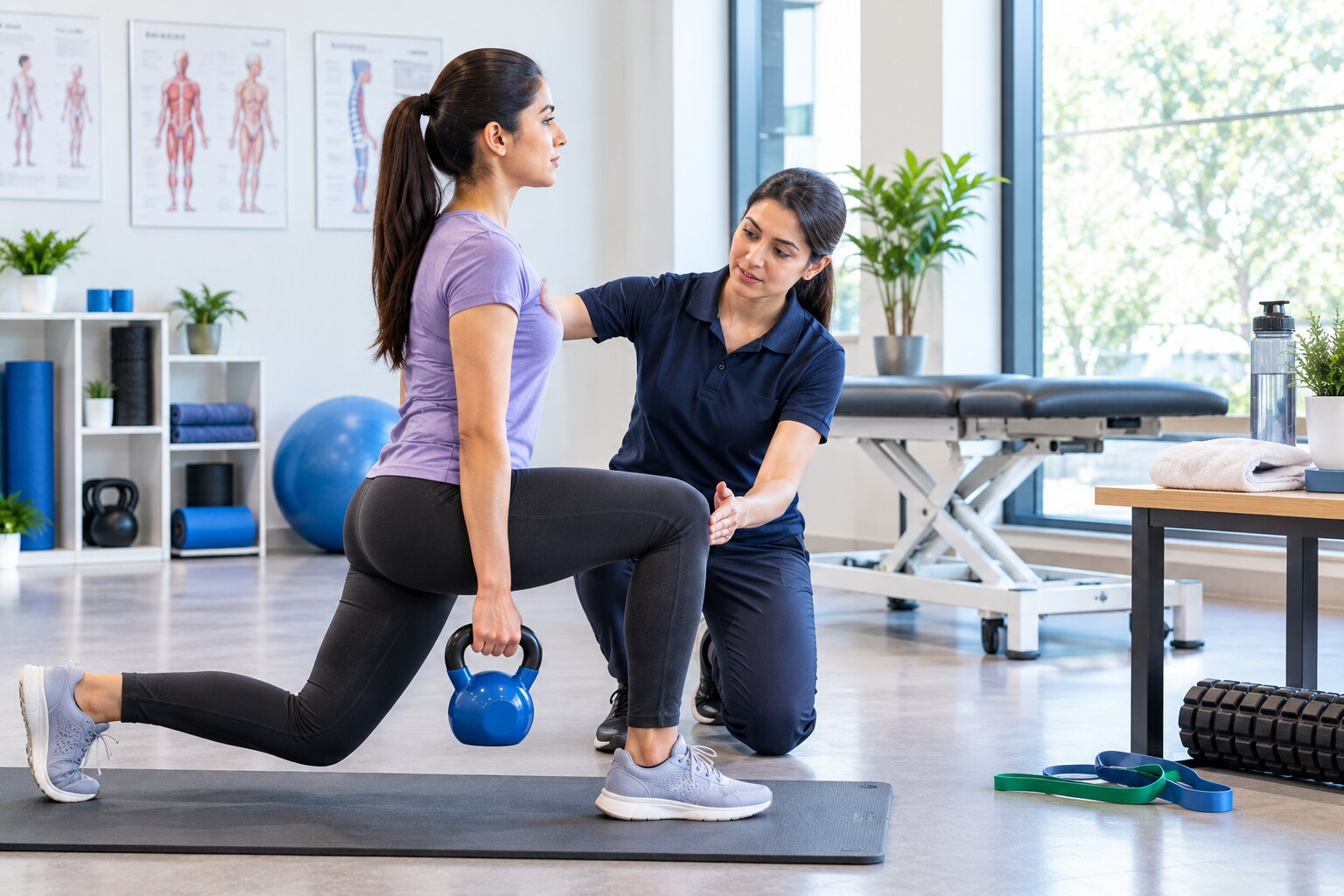
- Badminton and tennis: control the knee and hip during lunges, keep the shoulders balanced, and rotate through the trunk and hips instead of forcing the arm alone.
- Cricket: use safe bowling, throwing and batting mechanics; avoid repeated lumbar overextension or a painful shoulder position.
- Football: test single-leg balance, then control deceleration and cutting without the knee diving inward.
- Swimming: keep the head aligned, time breathing without lifting the chin, and control shoulder rotation through each stroke.
- Gym training: brace before lifting, keep feet stable, and choose a load your current capacity can control.
These checks support ergonomic care for athletes in Pune, but technique cannot offset a sudden training spike. Judge movement alongside pain, fatigue and recovery.
What happens during an ergonomic athlete assessment
Expect a structured baseline, not a quick posture lecture. Ergonomic musculoskeletal support in Pune should begin with your sport, work, study, commuting, sleep, footwear, equipment, medical conditions and goals. The practitioner should also ask what makes symptoms better or worse.
1. Review pain behaviour, training volume and recent spikes in duration, intensity, frequency or competition. Separate symptoms that improve with warm-up from pain that worsens as load increases.
2. Screen movement during standing, walking, running, squatting, landing and sport-specific tasks. This shows whether a problem appears only at speed, under impact or during fatigue.
3. Compare strength from side to side, then check joint mobility and range of motion. A clear difference can expose a capacity limit that stretching alone will not fix.
4. Observe breathing, rib movement and trunk control while you move. Poor coordination or breath-holding can make otherwise manageable tasks feel excessively demanding.
5. Review your shoes, racket, bicycle, work chair and other equipment. Fit, setup and repeated daily use can alter symptoms even when sporting technique looks sound.
The assessment should record measurable findings such as repetitions, joint angles, balance time, strength differences or running tolerance. It should identify whether your main limiter is strength, mobility, coordination, recovery or excessive training demand, then connect that finding to a practical change rather than prescribing “perfect posture.”
How to use ergonomic care between training sessions
Between sessions, ergonomic care turns small daily choices into training capacity. Raise your screen to eye level, keep both feet supported, let your shoulders relax, and change position every 30–45 minutes rather than holding one “perfect” posture.
1. Adjust the session edges. Warm up with sport-specific movement and finish by lowering intensity gradually. Stretching is not a universal fix; tendinopathy often needs carefully dosed progressive loading, not indefinite rest.
2. Build capacity with progressive strength and neuromuscular exercises, then correct technique in the movement that provokes symptoms. Increase volume, intensity or frequency from your baseline, not from a generic programme.
3. Protect recovery. Match hard sessions with adequate rest, regular sleep timing, sufficient sleep duration and enough food. Screen low energy availability when fatigue, recurrent injuries, menstrual or reproductive changes, or declining performance cluster together.
4. With autoimmune or inflammatory disease, set exercise dose against disease activity, fatigue, joint or tendon involvement, medication effects and flare patterns. A flare after every session requires review, not stubborn repetition.
5. Use measurable progression and return-to-training criteria. Ergonomic musculoskeletal support in Pune is valuable when it also sets escalation rules, rather than relying only on massage, heat or electrotherapy. Pro Active Clinic can be useful when its plan links daily posture, training load and sport function.
6. Reassess persistent fatigue, repeated injuries or performance decline before adding work; the right adjustment may be more food, better sleep, less load or medical review.
Related service
Sports Medicine and Performance Athlete Injury Prevention and Performance Support At Pro Active Clinic, we work with amateur and professional athletes to help them understand their bodies, reduce injury risk and support performance... |
When soreness is manageable and when training must stop
Post-training soreness is manageable when it settles over the next day or two, does not alter your walking or sport technique, and leaves strength and range of motion intact. Continue a graded plan when symptoms remain stable or improve; reduce load, speed, distance, or repetitions when discomfort changes movement.
Arrange medical assessment for pain that persists or worsens, swelling, instability, numbness, weakness, night pain, repeated flares, a hot acutely swollen joint, or sudden loss of function. Do not treat these signs as ordinary soreness.
Stop training and seek urgent assessment for:
- Suspected fracture, dislocation, tendon rupture, major ligament injury, or major trauma
- Progressive neurological weakness or loss of bladder or bowel control
- Unexplained fever
- Severe night pain after a back or neck problem
Pain intensity alone does not measure tissue damage or decide whether you need complete rest. The useful picture includes symptom behaviour, strength, range of motion, neurological findings, functional change, and what happens over time.
When comparing athlete physical care near Erandwane, ask for a written return-to-training plan, measurable progression criteria, and specific referral thresholds. Good ergonomic care for athletes in Pune should explain when to modify training, when to continue loading, and when passive treatments such as massage or heat are not enough.
Frequently asked questions
What does ergonomic physical care add to amateur training?
It connects training technique with work or study posture, equipment, recovery, sleep and symptoms so you can address movement problems before they disrupt sport.
What posture checks apply to running and gym training?
Runners need checks of trunk position, hip control, knee alignment and foot loading. Gym athletes need checks of lifting setup, spinal position, shoulder control and joint tracking during each exercise.
What happens during an ergonomic athlete assessment?
The assessment reviews your sport, training schedule, sitting and device habits, equipment, symptoms and recovery, then observes relevant movements and identifies practical changes.
How can you use ergonomic care between training sessions?
Break up prolonged sitting, adjust your desk and footwear, practise prescribed mobility or strengthening work, monitor soreness and protect sleep and recovery time.
When should you stop training because of soreness?
Stop when pain is sharp, worsening, changes your movement, causes weakness or swelling, follows an acute injury, or does not settle with rest. Seek clinical assessment before returning.