

Mild pain that keeps returning can come from a joint, muscle, tendon, nerve, work setup, sleep position or training load, and the right first appointment depends on the pattern. By the end, you will know when an orthopedic clinic for everyday pain in Pune is appropriate, what an assessment involves, and when physiotherapy, a general physician or urgent hospital care is the better choice.
Key takeaways
- Seek urgent care for sudden weakness, loss of bladder control, or a deformed limb.
- Expect questions, movement tests, strength checks, and a review of your medical history.
- Start with exercise and activity changes when pain responds to movement and has no warning signs.
- Bring symptom timing, triggers, medicines, scans, and your treatment goals to the appointment.
When everyday pain needs an orthopedic consultation—and when it needs urgent care
Mild pain after a new workout, long sitting, altered sleep position or extra walking does not automatically mean surgery. Reduce the provoking activity without prolonged bed rest, keep comfortable movement, and reassess after sensible changes. Pain severity alone does not determine urgency.
Use this triage:
1. Book an orthopedic consultation for pain in a joint, bone, muscle, tendon or nerve that persists, keeps returning, repeatedly limits work or exercise, or fails to improve after activity changes. An orthopedic clinician can assess sprains, osteoarthritis, suspected fractures and back or neck problems without assuming an operation is needed.
A search for orthopedic clinic for everyday pain in pune can be a reasonable starting point for this assessment.
2. Choose a general physician first when symptoms are widespread, accompanied by unexplained fatigue or weight loss, linked to a medication, or suggest infection or systemic disease. The doctor can review your medicines, examine for non-musculoskeletal causes and refer you to orthopedics, rheumatology or another service.
3. Go to urgent hospital care after major trauma, with a deformed joint, rapidly increasing swelling or inability to bear weight. Seek urgent care for chest pain, fever with a hot joint, new limb weakness, progressive numbness, loss of bladder or bowel control, or numbness around the groin.
For activity-related tendon or muscle pain, rehabilitation usually modifies the trigger and gradually rebuilds load tolerance. Stop the progression if function worsens or neurological symptoms appear.
What happens during an orthopedic assessment
The assessment starts with a conversation, not a scan. The clinician asks when symptoms began, where they travel, what triggers or relieves them, whether an injury occurred, and how they affect walking, sleep, work, exercise and daily tasks.
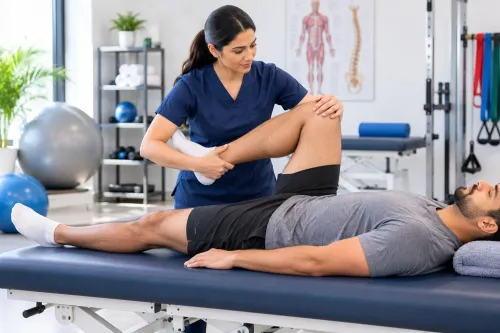
1. You will move the affected area while the clinician checks range of motion, pain and stiffness. They may test muscle strength, joint stability, reflexes and sensation, then perform a neurological examination for nerve-related signs.
2. You may be asked to walk, stand, squat or turn. The clinician observes gait, posture and movement quality, but does not treat posture as the sole explanation for pain; load, recovery and symptom behaviour matter too.
3. Imaging depends on the finding it could clarify. X-rays help assess suspected fractures, bone alignment and arthritis. Ultrasound can examine selected tendons and fluid problems. MRI is considered when its result could change treatment, such as with major soft-tissue or nerve involvement.
4. Uncomplicated low-back pain does not automatically require an X-ray, CT or MRI. Imaging is more useful when examination findings suggest a serious cause or when the result would change management.
5. Blood tests can help investigate infection, inflammation or another systemic cause. Normal results do not rule out every inflammatory condition, so prolonged morning stiffness, warm swollen joints, psoriasis or bowel and eye inflammation still deserve attention.
An orthopedic clinic in Pune may finish with a working diagnosis, safety advice, exercises or referral to physiotherapy, rheumatology or another service rather than surgery.
How treatment choices are made: exercise, medication, braces, injections or surgery
Treatment usually starts with the least invasive option that matches your examination findings and functional goal: walking, sleeping, working, or returning to sport. That often means modifying the aggravating activity instead of taking prolonged bed rest, then using progressive exercise, physiotherapy, ergonomic changes, or a different sleep position.
A physiotherapy orthopedic clinic in pune should measure strength, range of motion and function; massage alone rarely prevents recurrence.
Medication advice must account for ulcers, kidney disease, cardiovascular disease, pregnancy, high blood pressure, age and other medicines. Non-steroidal anti-inflammatory drugs can cause stomach bleeding, kidney injury, fluid retention or blood-pressure problems, even when bought without a prescription.
A brace is temporary support for a defined injury, such as an unstable sprain, not a substitute for rebuilding strength. Injections suit selected diagnoses after discussing expected benefit, duration and risks; they are not a universal pain cure.
Surgery is reserved for problems where it offers a meaningful advantage, such as an unstable fracture, severe nerve compression, or symptoms that persist despite appropriate nonsurgical care.
| Option | Best fit | Main limitation |
|---|---|---|
| Exercise and physiotherapy | Stiffness, weakness, tendon or sports problems | Progress must match symptoms and function |
| Medication | Short-term symptom control | Safety depends on health and other drugs |
| Brace | Specific injury needing temporary support | Prolonged use can encourage weakness |
| Injection | Selected joint or tissue diagnosis | Relief may be temporary |
| Surgery | Structural problem with clear benefit | Recovery carries operative risks |
For tendon and sports problems, rehabilitation gradually rebuilds load tolerance by increasing resistance, repetitions or sporting demand rather than stopping all activity.
Choosing between orthopedic, physiotherapy, sports-medicine and pain services in Pune
Choose the service by the problem you need solved, not by the word “pain” alone.
| Service | Best fit | What you receive |
|---|---|---|
| Orthopedic clinician | Persistent joint, bone, tendon, ligament or nerve symptoms; suspected injury | Examination, diagnosis, and discussion of surgical or nonsurgical options |
| Physiotherapist | Reduced movement, weakness, stiffness, poor mobility or difficulty returning to normal activity | Movement and strength assessment, supervised rehabilitation, and a progressive home program |
| Sports-medicine service | Training-related injury, high training volume or return-to-sport decisions | Sport-specific testing, workload planning and injury-prevention guidance |
| Pain-management service | Persistent pain needing specialist medication planning, procedures or multidisciplinary support | Review of pain medicines, targeted procedures and coordinated support |
Combined care often works best. An orthopedic diagnosis may need physiotherapy to rebuild strength and load tolerance, while a physiotherapist should refer you for medical review if symptoms suggest nerve involvement, major injury or another condition.
A physiotherapy orthopedic clinic in pune is worth judging by its exercise progression and functional measures, not massage alone. Passive relief without rebuilding capacity leaves the original problem intact.
For orthopedic care near bharati niwas colony, a specialist clinic in Erandwane is practical when it provides examination, clear referral pathways and follow-up. Pro Active Clinic is one option to assess against those criteria, including whether rehabilitation is available when needed.
Before booking an orthopedic clinic in pune, check:
- Clinician qualifications and relevant experience
- Appointment access and follow-up arrangements
- Imaging referral options
- Rehabilitation support and communication between providers
How to prepare so the appointment answers the real problem
Bring enough information to show how the problem behaves, not just where it hurts.
1. Pack previous X-ray, MRI or ultrasound reports and the images themselves. Add a medication and supplement list with doses, allergy details, injury history, autoimmune diagnosis records, and names of other clinicians involved in your care.
2. Track symptoms for several days or weeks. Record the exact location, severity, stiffness, numbness, weakness, swelling, triggers, time of day and sleep disruption. Note which tasks have become difficult.
3. Record function in practical terms: walking distance, sitting tolerance, lifting ability, stairs, sport participation and work demands. These details reveal more than a pain score alone and help distinguish a tolerable ache from a problem limiting your life.
4. Describe morning stiffness precisely, including how long it lasts. Mention hot or visibly swollen joints, psoriasis, inflammatory bowel disease, eye inflammation, or a family history of inflammatory arthritis. These clues can support rheumatology assessment rather than repeated treatment as ordinary mechanical pain. Normal initial blood tests do not exclude every inflammatory condition.
5. Write your top three questions, including what you can safely do now, which treatment fits the examination, and when to return. The first visit should produce a working explanation, a safety plan, a treatment choice and a review point, even when no scan is needed immediately.
Frequently asked questions
When does everyday pain need an orthopedic consultation rather than urgent care?
Book an orthopedic consultation when pain persists, limits walking or daily tasks, keeps returning, or follows an injury. Seek urgent care for sudden weakness, loss of bladder or bowel control, a deformed limb, severe swelling after trauma, or inability to bear weight.
What happens during an orthopedic assessment?
The clinician asks when symptoms began, what worsens or eases them, and how they affect daily activities. They examine posture, movement, swelling, tenderness, strength, reflexes, and joint stability, then decide whether imaging or blood tests are needed.
How are exercise, medication, braces, injections, and surgery compared?
Treatment depends on the diagnosis, symptom duration, functional limits, examination findings, and your goals. Exercise and activity changes often address movement problems; medication manages symptoms; braces support selected injuries; injections target specific conditions; surgery is considered when structural damage or failed conservative care warrants it.
Should you choose orthopedics, physiotherapy, sports medicine, or pain services in Pune?
Choose orthopedics for suspected bone, joint, tendon, ligament, or fracture problems; physiotherapy for rehabilitation and movement retraining; sports medicine for training-related injuries and performance; and pain services for persistent pain requiring specialised pain management. These services can work together.
How should you prepare for an orthopedic appointment?
Write down symptom location, onset, triggers, severity, previous injuries, relevant conditions, and treatments tried. Bring medication names and doses, scan reports and images, and questions about activity, recovery time, and treatment alternatives.