

Posture care is not about forcing your body into one permanent position or judging pain from a photograph. It is an individual assessment of how you move, where strain builds up, and which changes could help you sit, stand, walk, work, or play with greater control. By the end, you will know what to expect from an assessment, how to prepare, and how to judge whether a Pune provider is offering useful care.
Key takeaways
- Target easier movement, not a permanently “correct” posture.
- Ask how the assessment links posture findings to your daily tasks.
- Track pain, movement tolerance, work comfort, and sporting performance.
- Seek another clinical explanation when symptoms persist despite posture changes.
What posture care can change in everyday movement
Posture care can make sitting, standing, walking, lifting, or training more tolerable by improving movement control—not by permanently installing one “correct” shape. Your posture changes with fatigue, task demands, strength, mobility, and pain, so the useful target is function rather than appearance.
Practical changes may include:
- Less strain during desk work or prolonged standing because your spine, hips, shoulders, and feet share load more effectively.
- Better awareness of when you brace, slump, hold your breath, or shift weight, allowing earlier adjustments before discomfort escalates.
- Smoother balance, reaching, lifting, or sports movements through improved joint mobility, muscle coordination, breathing mechanics, and movement efficiency.
A posture specialist in Pune should connect exercises or activity changes to your actual routine, not judge you from a photograph alone. A rounded upper back or forward head position does not prove that posture caused your pain, and posture care cannot promise a cure.
Seek medical assessment for progressive weakness or numbness, new bladder or bowel problems, saddle-area numbness, fever, unexplained weight loss, significant trauma, cancer history, or persistent night pain.
Who may benefit—and when posture is not the whole explanation
Posture-focused care fits when changing position, movement habits, or activity load changes your symptoms or improves tasks such as sitting, standing, walking, lifting, or sport. Choose function over appearance: a rounded back or forward head does not prove that posture caused your pain, and no single “perfect” posture suits everyone.
A useful assessment should consider symptoms, work demands, strength, mobility, balance, sleep, and activity level—not rely on a photograph.
Seek medical assessment before routine posture coaching if you have:
- Persistent night pain or unexplained weight loss
- Fever, a history of cancer, or significant trauma
- Progressive weakness, spreading numbness, or saddle-area numbness
- New bladder or bowel problems
- Sudden severe neurological symptoms
If you have inflammatory arthritis, marked swelling, an active flare, fever, medication complications, or a new systemic symptom, ask your rheumatology team before increasing exercise. Pain during rehabilitation is not automatically harmless posture-related soreness.
For postural care near erandwane, expect practical changes rather than permanent correction claims: adjust screen and chair height, support your feet, keep frequent items close, and vary position regularly. If symptoms persist despite these changes, worsen, or do not match your movements, posture is not the whole explanation.
What happens during a posture assessment
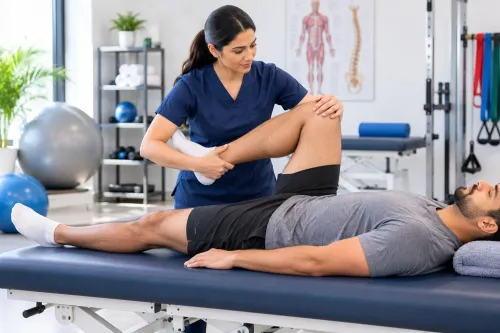
Expect more than a photograph from a competent posture assessment. The practitioner should ask when symptoms began, what worsens or eases them, how you work, sleep, train, and move, and what you want to do more comfortably. A posture image cannot identify the cause of musculoskeletal pain.
The examination may include:
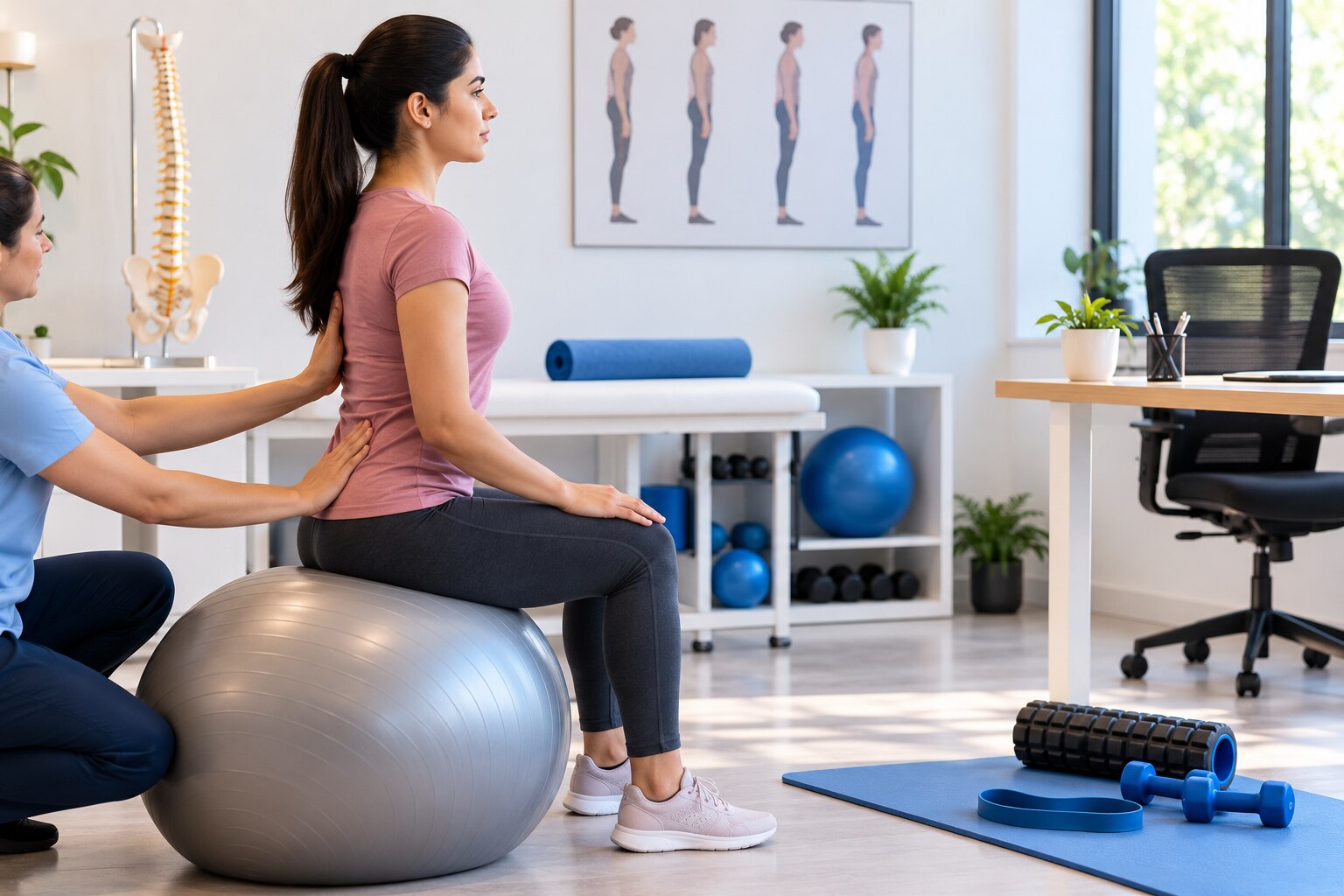
- Standing and sitting observation, including head, shoulder, pelvis, and foot position
- Walking, squatting, reaching, lifting, or sport-specific movement tests
- Spinal and joint range-of-motion checks
- Muscle strength, balance, coordination, and movement-control testing
- A neurological screen when pain, tingling, numbness, weakness, or radiating symptoms suggest nerve involvement
Bring information that helps connect findings with daily life:
- A short symptom timeline, including pain location, intensity, duration, and triggers
- Previous imaging reports and diagnoses, not just scan images
- Current medicines, supplements, and relevant medical conditions
- A record of activities that worsen symptoms, such as desk work, driving, running, or lifting
- Your functional goal, such as sitting for two hours, returning to sport, or climbing stairs
If you have an inflammatory or autoimmune condition, include flare patterns and treating-specialist details. Musculoskeletal care in Bharati Niwas Colony should support function without replacing medical management of disease activity, medication effects, or joint instability.
How an individual care plan turns findings into action
A useful plan turns assessment findings into actions you can test. It names the activity to restore or limit, the exercises or habit changes, the frequency, the expected improvement, and the review date. If progress stalls, reassess the diagnosis instead of automatically adding more posture treatment.
Changes might include:
- Strength and movement-control exercises for the trunk, hips, shoulders, or neck
- Short movement breaks during prolonged sitting, with the screen, chair, and work height adjusted to reduce strain
- Gradual exposure to lifting, walking, running, or sport rather than prolonged avoidance
- Breathing, sleep-position, or pacing strategies when they affect comfort and activity tolerance
For inflammatory or autoimmune conditions, rehabilitation may support strength, stiffness, fatigue, and physical capacity; it does not control disease activity. Coordinate exercise changes with the clinician managing your condition, especially during a flare or medication change.
| Option | Main focus | What it may involve |
|---|---|---|
| Posture care | Movement habits and tolerance | Exercise, education, ergonomic changes, and movement retraining |
| Physiotherapy | Function after pain, injury, or illness | Assessment-led rehabilitation, strengthening, mobility, and graded activity |
| Manipulation | Short-term joint or spinal movement | Hands-on techniques, usually alongside active rehabilitation |
| Medication | Pain or inflammation control | Drugs prescribed after considering diagnosis, risks, and other medicines |
| Surgery | Structural or neurological problems needing repair | An operation when conservative care cannot address the problem |
How to evaluate Shridhar Chiplunar’s posture care in Pune
Verify the practitioner’s qualification and professional registration, exact Pune consultation location, fees, cancellation terms, privacy practices, and referral process before choosing Shridhar Chiplunar posture care in Pune or Shridhar Chiplunar physical care in Pune.
| Check | Evidence to verify | Warning sign |
|---|---|---|
| Qualification | Registration number and issuing professional body | Vague claims such as “posture expert” |
| Assessment | Symptom history, movement tests, strength, mobility and relevant neurological screening | A posture photograph treated as a diagnosis |
| Fees and records | Written consultation fee, cancellation policy and privacy information | Charges or record handling explained only after treatment |
| Safety network | Referral arrangements for imaging, orthopaedics, neurology, rheumatology and emergency care | Every symptom attributed to posture |
A useful first visit ends with a written, testable plan rather than a promise to “correct” your posture permanently. Ask for:
- The activity to limit, modify or restore
- Exercises or habit changes, with frequency and duration
- A functional target, such as sitting for 45 minutes or returning to a lift
- The expected review date and the measure used to judge progress
Your plan should address symptoms, movement tolerance, work, sleep, strength and sport—not appearance alone. Seek medical assessment for night pain, fever, unexplained weight loss, major trauma, progressive weakness or numbness, saddle numbness, or new bladder or bowel problems. Sudden severe neurological symptoms need urgent care.
Related services
Musculoskeletal and Postural Care Primary Physical Ailment Care At Pro Active Clinic, we support people living with common physical ailments such as neck, back, knee and shoulder pain, slip disc, carpal tunnel... |
Scoliosis and Postural Care Scoliosis Care for Young Adults At Pro Active Clinic, we provide scoliosis-focused care for young adults with an abnormal sideways curvature of the spine. |
How to measure progress for work, sport, and inflammatory conditions
Track one or two baseline tasks for two to four weeks: sitting duration, walking distance, lifting tolerance, training load, pain during and after activity, and next-day stiffness.
Improvement means you can do more with less symptom disruption, not that your shoulders or spine look permanently “corrected.” Record exercise frequency and flare status so a clinician can distinguish progress from a quiet day.
| Situation | Signs posture-focused care is helping | Involve another professional when |
|---|---|---|
| Work | You sit, stand, reach, or lift longer with fewer symptoms and less fatigue | Pain persists despite a documented plan or work capacity keeps falling |
| Sport | Training volume, movement control, recovery, and next-day symptoms improve | Weakness, repeated injury, swelling, or performance loss continues |
| Inflammatory condition | Daily function and stiffness improve between flares | Swollen joints, fever, medication concerns, or rising disease activity appear |
Seek prompt medical assessment for night pain, unexplained weight loss, fever, major trauma, progressive weakness or numbness, saddle-area numbness, or new bladder or bowel problems. Sudden severe neurological symptoms require urgent care. Lack of improvement should prompt diagnostic reassessment, not automatic escalation of posture treatment.
Frequently asked questions
What can posture care change in everyday movement?
Posture care can improve movement control and make sitting, standing, walking, lifting, or training more tolerable. It does not permanently install one correct body shape.
Who may benefit from posture care?
People with movement-related discomfort, work-related strain, training limitations, or posture concerns may benefit. Persistent, severe, or unexplained symptoms need broader clinical assessment.
What happens during a posture assessment?
A clinician reviews your symptoms, daily tasks, movement habits, strength, mobility, and relevant medical history, then observes how you perform specific movements.
How does an individual posture care plan work?
The plan connects assessment findings to practical changes such as movement exercises, strength work, mobility work, workstation adjustments, and training modifications.
How should you measure progress from posture care?
Track specific outcomes, including sitting time, walking tolerance, lifting comfort, pain during tasks, training performance, and symptoms associated with inflammatory conditions.