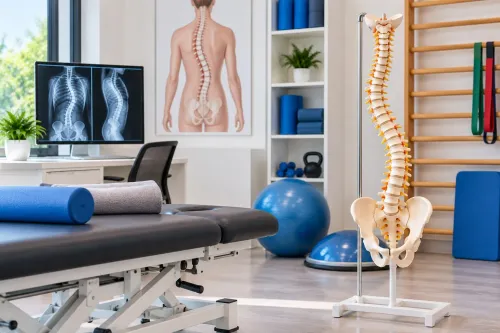



Pain does not automatically mean you need an operation, but exercise-based care is not appropriate for every symptom or diagnosis. You will learn how to identify a safe starting point, what an assessment should test, how treatment changes by condition, and how to judge MobilityImprovement over time.
Key takeaways
- Conservative physiotherapy builds strength, movement control and daily capacity.
- Your first assessment should examine movement, strength, symptoms and functional goals.
- Lasting mobility requires progressive exercise and consistent practice between appointments.
- Seek medical review for worsening weakness, major trauma or new bladder or bowel problems.
When is conservative physiotherapy a safe starting point?
“Without surgery” means active care, not simply waiting for pain to disappear. PhysiotherapyTreatment may include structured exercise, mobility drills, progressive strengthening, posture and movement education, breathing work, activity modification and self-management. NonSurgicalPainRelief should build capacity; hands-on treatment can support movement or short-term comfort, but it should not replace exercise.
A reasonable starting point includes uncomplicated low-back pain, stable knee or shoulder symptoms, mild-to-moderate stiffness, selected tendon or ligament problems, and non-progressive movement limitations. For uncomplicated low-back pain, education, continued activity and structured exercise usually come before routine imaging; scans are reserved for suspected serious disease or findings likely to change treatment.
Seek prompt orthopedic, neurological or rheumatology assessment if you have:
- New bowel or bladder loss, saddle numbness or progressive limb weakness
- Major trauma, fever with severe back pain, unexplained weight loss, or suspected cancer or infection
- A hot, acutely swollen joint, especially with fever or rapidly worsening pain
Suspected cauda equina syndrome, involving nerve compression that can cause bladder, bowel or saddle-sensation changes, is an emergency. Go to emergency care rather than beginning routine exercises. NonSurgicalPainRelief never means delaying necessary medical care, particularly when weakness progresses or an inflammatory joint flare needs rheumatology treatment.
What should happen during your first physiotherapy assessment in Pune?
Your first appointment should turn your story and physical findings into a safe, usable plan. The clinician will ask when symptoms began, what aggravates them, how they affect sleep, work and daily tasks, what treatment you have tried, and which medical diagnoses or medicines matter.
| Assessment area | What happens | Why it matters |
|---|---|---|
| History and measures | Pain rating, disability or function questionnaire, sleep and activity limits | Establishes a baseline |
| Movement and strength | Range-of-motion, task movements, muscle strength and load tolerance | Identifies capacity and exercise starting points |
| Neurological checks | Sensation, reflexes and limb strength | Flags nerve involvement requiring referral |
| Balance, gait and posture | Walking, single-leg balance, sit-to-stand and working posture | Guides safety and practical movement changes |
Posture analysis is not a search for one perfect position that prevents pain. The clinician should link posture with movement variety, conditioning and the demands of your work or sport.
Findings determine whether exercise-only PhysiotherapyTreatment is suitable, whether imaging or orthopedic, neurological or rheumatology review is needed, and which home practices fit your time, space and symptoms. Pro Active Clinic in Erandwane, Pune, is one place to discuss structured exercise-based care and practical daily guidance.
- What is the working diagnosis?
- Which findings would change the plan?
- How will progress be measured?
- What should I do during a flare?
Related services
Musculoskeletal and Postural Care At Pro Active Clinic, we support people living with common physical ailments such as neck, back, knee and shoulder pain, slip disc, carpal tunnel... View service → |
Scoliosis and Postural Care Scoliosis Care for Young Adults At Pro Active Clinic, we provide scoliosis-focused care for young adults with an abnormal sideways curvature of the spine. View service → |
How does the plan change for back, knee, shoulder, nerve and spinal conditions?
The plan changes with the tissue involved, the task you need to regain and any neurological or inflammatory signs. NonSurgicalPainRelief uses active loading; PhysiotherapyTreatment may include hands-on techniques only to support exercise and movement.
| Condition | Main approach | Safety or progression point |
|---|---|---|
| Back pain | Graded activity, trunk and hip strengthening, mobility work, education and selective hands-on treatment within an exercise package | Progress by function and symptom response, not pain elimination alone |
| Knee degeneration | Quadriceps and hip strengthening, aerobic conditioning, stair or sit-to-stand practice and load adjustment | Reduce excessive impact without stopping useful movement |
| Shoulder pain | Restore range of motion, then load the rotator cuff and scapular muscles | Reintroduce overhead reaching gradually |
| Stable slipped disc | Use symptom-guided movement, progressive strength and neurological monitoring | Worsening weakness needs medical review |
| Carpal tunnel syndrome | Assess the wrist and nerve function, modify keyboard, tool or gripping demands | Refer if sensory or motor loss progresses |
| Ligament injury | Protect the area early, then restore range, strength, balance and task-specific loading | Advance after control and stability improve |
| Scoliosis | Individualize trunk control, breathing and position work | The aim is function and comfort, not a promise to straighten the spine |
Tendons also need calibrated loading: reduce volume during a flare, then rebuild resistance, repetitions, speed or sport demand. In inflammatory arthritis, coordinate exercise changes with rheumatology during active disease; prolonged complete rest increases weakness and stiffness.
How do you know whether mobility is lasting—and how much effort will it take?
A lower pain score does not prove restored capacity. MobilityImprovement means you can do more of what matters with acceptable symptoms, steadier movement and greater confidence.
Measure progress with several functional markers:
- Walking distance or time
- Sit-to-stand repetitions
- Stair tolerance
- Joint range and strength
- Balance and work capacity
- Sleep quality
- Return-to-sport tasks
- Symptoms during activity and the following day
Expect appointments weekly or fortnightly at first, followed by more independent practice as control improves. Home exercises often take 10 to 30 minutes on most days, with progress measured over weeks or months rather than after one session. A plan may increase resistance, repetitions, range, speed or task complexity as your tolerance improves.
A temporary discomfort increase does not automatically mean harm. During a flare, your clinician can reduce volume, range or resistance, then rebuild gradually. Consistent practice usually develops capacity more reliably than sporadic appointments, complete rest or unsupervised gym exercise, which can either underload you or increase load too quickly.
Keep a weekly log: exercise dose, overall activity, symptoms during and 24 hours after activity, and one functional milestone. Lasting improvement means returning to work, sleep, sport or daily activities with more confidence—not necessarily reaching zero pain.
When should you choose physiotherapy over injections, medication or surgery?
Choose PhysiotherapyTreatment when the diagnosis is suitable for active rehabilitation, neurological findings are stable, symptoms have a manageable duration, and you want greater function rather than symptom suppression alone. The decision depends on diagnosis, symptom duration, examination findings, response to a properly dosed programme and personal goals—not pain intensity alone.
| Option | Useful role | What it cannot replace |
|---|---|---|
| Medication | Reduces pain or inflammation | Rebuild strength, movement habits or load tolerance |
| Injection | Short-term relief for selected diagnoses | Progressive rehabilitation |
| Massage | Relaxation and short-term comfort | Loading, conditioning and functional practice |
| Rest | Protects an acute injury | Long-term strength; prolonged avoidance causes deconditioning |
| Unsupervised gym work | General exercise | Neurological screening and safe load progression |
Conservative care is insufficient when you have:
- A confirmed major ligament or tendon rupture
- Severe or progressive nerve compression
- An unstable injury or advanced joint damage
- Persistent functional loss despite good adherence to rehabilitation
- A diagnosis for which surgery offers a clear, stage-specific benefit
Seek orthopedic, neurological or rheumatology review for red flags, progressive weakness or numbness, or inflammatory joint findings such as persistent swelling, heat and marked stiffness. Physiotherapy can support inflammatory arthritis, but it does not replace disease-modifying treatment or rheumatology care.
Surgery is not an automatic first step, and it is not a failure of PhysiotherapyTreatment. It becomes appropriate when the diagnosis, risks, functional loss and likely benefit justify it; NonSurgicalPainRelief remains a choice only when it does not delay necessary medical care.
Frequently asked questions
When is conservative physiotherapy a safe starting point?
It is a reasonable starting point for many movement-related problems when symptoms are stable, there is no major trauma, and no urgent neurological signs. A clinician should assess worsening weakness, loss of bladder or bowel control, unexplained fever, or severe unrelenting pain before exercise begins.
What happens during a first physiotherapy assessment in Pune?
The physiotherapist reviews your symptoms, medical history, work and activity demands, then examines movement, strength, balance, posture and functional tasks. The assessment should end with clear goals, an exercise plan and guidance on activities to modify.
How does physiotherapy change for back, knee, shoulder, nerve and spinal conditions?
The plan depends on the involved tissues, irritability, strength deficits, nerve findings and daily limitations. Back and nerve symptoms may require neurological screening; knee and shoulder care often emphasises graded strength and load; spinal and posture concerns require movement control without forcing painful ranges.
How do you know whether mobility improvement is lasting?
Track specific measures such as walking time, stair tolerance, range of motion, strength, pain response and the activities you can complete. Improvement is more durable when function holds between sessions and remains stable as exercise difficulty increases.
When should you choose physiotherapy over injections, medication or surgery?
Choose a physiotherapy-led approach when symptoms are suitable for active rehabilitation and you can participate in progressive exercise. Medication or injections may support short-term symptom control, while surgery requires specialist review when structural damage, neurological loss or failed conservative care makes it necessary.